
By Kat Leslie
If a hedge fund quietly beat the market by nearly 17 percent a year while sitting on mountains of nonpublic information, the SEC would be circling like sharks.
But when members of Congress do it?
There’s an app and a subscription for that.
A new promotional push by Benzinga Government Trade Tracker invites ordinary investors to “see how Congress is trading the market,” pulling data from lawmakers’ legally required disclosures under the STOCK Act. The tracker currently shows 185 members of Congress actively trading, logging more than 440 disclosed trades, with an average reported performance of +16.9 percent.
Over the past 12 months alone, lawmakers have collectively pulled more than $91 million out of the market, according to aggregated disclosure data used by the tracker.
That’s not just beating the S&P 500. That’s humiliating it.
So what exactly is going on here?
Are America’s elected officials secretly the greatest investors of their generation?
Or are they operating inside the most legally protected information bubble in the world?
The Law That Was Supposed to Fix This
Congress passed the STOCK Act in 2012 after public outrage over lawmakers trading stocks tied to industries they directly regulated.
The law did two main things:
- It formally confirmed that members of Congress are subject to insider-trading laws
• It required them to disclose certain stock trades (generally within 45 days)
What it did not do was ban them from trading.
So today, a senator can sit in a closed briefing about a defense contract, a looming banking rule, a drug-pricing reform, or a tech regulation — and still legally trade stocks in that sector, as long as prosecutors can’t prove the trade was based on “material nonpublic information.”
That last part is the loophole big enough to fly Air Force One through.
Transparency That Arrives After the Money Is Made
Supporters of the current system argue that disclosure creates accountability.
Critics say it creates a farce.
Most congressional trades aren’t revealed until weeks later, long after market-moving information has already priced in. Even worse, penalties for violating disclosure rules have often been laughably small — in some cases just $200 per violation, a rounding error for portfolios worth millions.
In other words:
You can break the rules.
You can file late.
You can do it again.
….and you can still come out far ahead.
That’s not a deterrent.
That’s a business expense.
The Scale of the Trading Problem
This isn’t about a handful of rogue traders in Congress.
A Common Cause analysis found lawmakers made more than 13,000 stock trades worth over $635 million in a single year.
That’s not “passive investing.” That’s an asset-management operation with voting privileges.
And unlike hedge funds or institutional traders, members of Congress enjoy:
- Private briefings on economic threats
• Early access to regulatory plans
• Closed-door intelligence on wars, pandemics, sanctions, and bailouts
• Direct influence over industries they trade in
Wall Street pays billions for scraps of that kind of insight. Congress gets it by default.
The Real Problem Isn’t Just Trading
It’s the Collapse of Ethical Boundaries in Public Life.
What may be most disturbing is not that members of Congress trade stocks — but that this behavior now fits neatly into a much larger and increasingly normalized pattern across government: the slow erosion of ethical boundaries, the broad acceptance of conflicts of interest, and the near-total absence of consequences for conduct that would end careers in almost any other profession.
The line between what is legal and what is acceptable has blurred so badly that it has practically vanished.
Officials now routinely:
- Move between government and the industries they regulate
• Accept lucrative lobbying or consulting jobs from former oversight targets
• Vote on policies that benefit their own political or financial interests
• Steer public funds toward politically connected firms
• Receive private briefings that move markets
• Disclose conflicts only after the fact — if at all
Legality has quietly become a substitute for integrity.
Named Examples That Refuse to Go Away
This isn’t theoretical.
It’s a pattern.
- Sen. Richard Burr sold up to $1.7 million in stocks shortly before the COVID market crash after receiving private pandemic briefings. No charges.
• Sen. Kelly Loeffler traded heavily around the same time. No charges.
• Sen. Dianne Feinstein’s husband made timely trades after closed briefings. No charges.
• Speaker Nancy Pelosi’s household repeatedly posted eye-popping returns on tech and chip stocks while Congress debated semiconductor legislation. No charges.
Meanwhile:
- Former FDA officials slide into pharma board seats
• Defense officials rotate into weapons-contractor boardrooms
• Financial regulators quietly join Wall Street firms
• Former lawmakers cash in as lobbyists for industries they once regulated
All perfectly legal.
All corrosive to public trust.
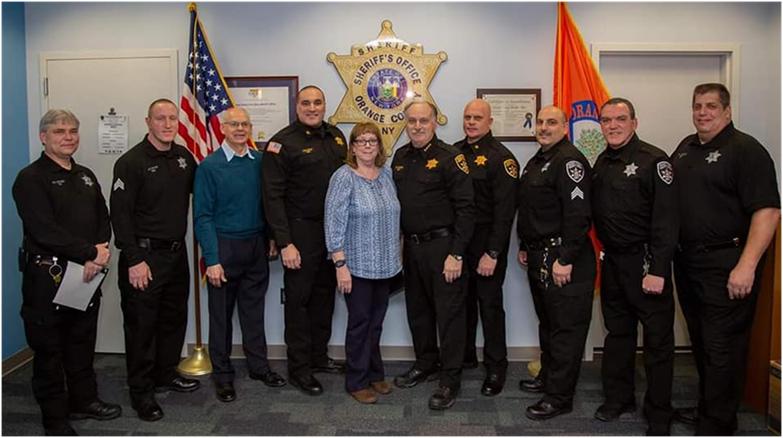
And Now, Welcome to Orange County Legislature
If all of this feels abstract, consider what just happened here at home.
In January, the Orange County Legislature voted to exclude your local newspaper from the county’s official public-notice list, a move that effectively cuts off long-standing community papers from publishing legally required notices about government actions.

In plain English:
The same body that governs taxes, development, contracts, and public spending just voted to limit which newspapers are allowed to inform the public about those actions.
Was it illegal?
No.
Was it decent?
Also no.
It was a textbook example of the same ethical decay on display in Washington — power protecting itself, narrowing transparency, and insulating decision-makers from scrutiny.
Just like congressional stock trading, it followed the letter of the law while torching its spirit.
The Quiet Institutionalization of “Technically Legal Corruption”
This is not corruption in the old-fashioned, envelope-of-cash sense.
It is something far more modern, far more subtle — and far more dangerous: Technically legal corruption.
It is the art of designing rules so weak, enforcement so toothless, and disclosure so delayed that behavior which would outrage the public becomes routine inside the government.
When lawmakers write their own enforcement standards…
When regulators plan their next private-sector payday…
When agencies find misconduct with penalties smaller than profits…
When officials vote on policies tied to their own interests…
Then the ethical framework has already collapsed.
At that point, the only real constraint left is: How bad will this look in tomorrow’s headlines?
Final Word: This Isn’t About Stocks
It’s About the Survival of Public Trust.
At this point, the danger is no longer insider trading.
It is institutional moral drift.
It is the normalization of conflicted governance.
It is the disappearance of ethical shame.
It is the quiet rewriting of rules to accommodate bad behavior instead of stopping it.
When violations carry no penalty…
When conflicts carry no recusal requirement…
When officials write their own enforcement standards…
That is no longer a loophole.
That is a governing philosophy.
And when citizens conclude that public office is just another wealth-building strategy for insiders…
They stop believing the system belongs to them.
That is how democracies don’t collapse overnight —
they rot quietly, from the ethics outward.
Meanwhile, down here in Orange County, they’re helpfully turning down the lights and locking the doors on the newspapers — just in case anyone was thinking of watching too closely.
But don’t worry.
Everything is perfectly “legal”.
And in 2026, that’s the most damning sentence in American public life. It is the moral equivalent of saying:
Yes, Your Honor, I did it — but I checked first, and technically I was allowed to.
And that’s the sound a democracy makes when it quietly locks itself in the bathroom and pretends everything is okay.