

Scarab machine: a heavy-duty, self-propelled straddle machine designed to lift, aerate, and mix large organic waste piles
By Peter Lyons Hall
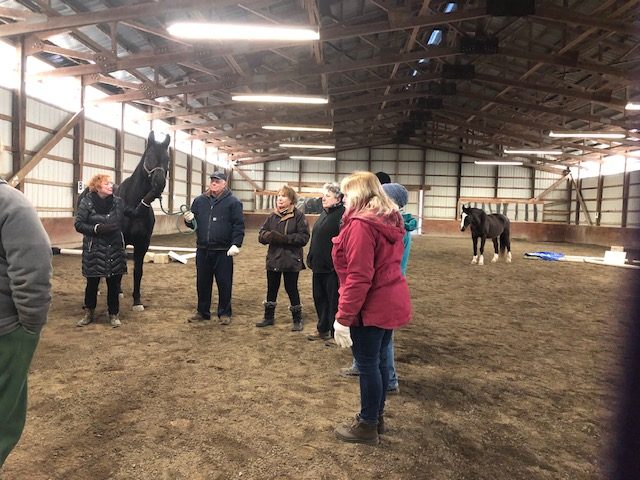
Bethlehem, N.Y. — Members of the Town of Warwick’s Climate Smart Committee traveled to the Albany County town of Bethlehem on Friday, August 14, 2026, to study a municipal composting operation that officials there have turned into a revenue-generating answer to rising landfill costs — and that Warwick hopes to adapt as it weighs adding commercial composting to its own recycling efforts.
The visit comes as Warwick looks for ways to keep organic waste out of an ever-shrinking number of increasingly expensive landfills, where buried food scraps decompose and release methane, a greenhouse gas many times more potent than carbon dioxide.
What the Warwick delegation found was the largest compost facility in the Capital Region — and the only municipal facility in that region composting food scraps alongside yard waste. Bethlehem debuted the region’s first municipal aerated static pile composting system in April 2022, and the program has expanded steadily since.
Town of Warwick Supervisor, Jesse Dwyer, said “We have visited several composting and waste management facilities in recent months, but the program here in the Town of Bethlehem, a community similiar in size to the Town of Warwick, has offered us a good opportunity to better understand what’s involved with such a sophisticated way to optimize resources, reduce trips to landfills, and generate revenue.”
Bethlehem’s Recycling and Composting Department head Dan Rain, who led the guided tour of the facility, told WAMC public radio in 2024 that the town was operating two aerated composting zones with a third on the way, taking in growing volumes of food scraps from residential and commercial customers alike. Rain said at the time he was fielding two to five calls a day from residents wanting to join the town’s food scraps drop-off program, which had grown from a 30-household pilot to more than 75 registered households in under a year. Rain describes the program as offering residents tiered options: do-it-yourself backyard composting supported by the town’s discounted composter sales, free classes through Parks and Recreation, and year-round troubleshooting advice; subscription curbside pickup through Foodscraps360, whose collections all go to the town facility; and the drop spots for those who fall in between. “The town’s annual truckload sale offers backyard composters and rain barrels at 30 to 50 percent off retail,” revealed Rain.
The system works by layering new capability onto old infrastructure. Bethlehem has composted curbside-collected yard waste — brush, grass clippings and leaves — in turned windrows for decades. Food scraps, delivered by private haulers such as FoodScraps360 and County Waste or dropped by residents at three “drop spot” sheds around town, are blended with ground yard waste at a minimum 3-to-1 ratio and piled over perforated pipes. Timer-controlled blowers force air through the piles around the clock, driving temperatures to 131 degrees Fahrenheit and beyond — hot enough to destroy pathogens and weed seeds, and hot enough to safely process meat, bones and dairy that backyard composters must avoid.
Participation costs residents little. Drop-off is free at the town compost facility and roughly $8 a month per household at satellite locations, with scholarships available for families facing financial hardship. Demand is strong enough that one location is full and carries a waiting list.
The finished product comes back to the community — and to the town’s bottom line. Bethlehem sells branded compost and mulch products, including a premium food-scraps blend packaged in compostable burlap bags, to residents, landscapers and bulk buyers. Trade publication BioCycle reported the town earned about $160,000 in bulk compost sales in 2021. Rigor Hill Farm Manager, Luke Ippoliti, one of Bethlehem’s regular customers, told the group that the quality of Bethlehem’s compost was extremely high and consistent in availability. Bethlehem Town Supervisor, David VanLuven, has credited community partners, including churches that host drop-off sheds, with helping keep food scraps out of landfills and turning them into what he calls “garden gold.”
Warwick would not be starting from zero. Sustainable Warwick’s volunteer collection at the Warwick Valley Farmers’ Market gathered some 17,000 pounds of food scraps in 2025 — material that in a landfill would have produced roughly 600 pounds of methane, the climate equivalent of burning 2,700 gallons of gasoline — and the organization has discussed expanding collection town-wide, year-round. And Grow Local Greenwood Lake’s food scrap collection effort is expected to collect 5,500 lbs by year’s end, according to the program founder, Chad Pilieri.
Sustainable Warwick Steering Committee member, Kate Debold, said that “Warwick’s Food Scraps to Compost Program, has been operating for over five years and this recent visit to Bethlehem is a good hybrid example of earlier visits to other facilities. It could be an ideal model that’s very workable. We wholeheartedly support this effort of looking into a viable compost program for the town. Composting participation has grown in size and support throughout the community and we feel strongly that it would be well received town wide.”
Money to help build such a program is on the table. The state Department of Environmental Conservation’s Climate Smart Communities program offers 50/50 matching grants, and DEC has awarded nearly $7.25 million to municipalities for organics management, with additional annual grant rounds for municipal food scraps recycling initiatives. A municipal program would also position Warwick ahead of the state’s Food Donation and Food Scraps Recycling Law, which requires large food waste generators to divert organics from landfills.

L to R: Luke Ippoliti, Farm Manager, Rigor Hill Farm; Renée Panetta, Senior Waste Reduction Consultant, CET; Dr. Bill Makofske; Michael Helme, Sustainable Warwick; Eddie Cullari, Managing Director, Eddie’s Roadhouse; Gregg Galluccio, SVP Product Management and Engineering (ret), Energy Focus; Warwick Town Superisor, Jesse Dwyer; Kate Debold, Sustainable Warwick; Peter Lyons Hall, Digital Marketing Professional.